
How Long Does a PVC Liner Fish Pond Last? Key Factors
“How long does the liner last?” It is one of the first questions every serious buyer asks when sou...
Article date: 2026-11-06 | Updated date: 2026-11-06
Bass is one of the most commercially attractive species in global aquaculture. Whether the market calls for barramundi (Asian seabass) in Southeast Asia and Australia, largemouth bass in China and the Americas, or European seabass in Mediterranean projects, buyers share the same production logic: fast-growing, high-value fish that respond well to intensive pond culture. As more farms move away from dug earthen ponds toward controlled, installable tank systems, one question reaches our inbox again and again: is a canvas fish tank for bass farming a workable choice for a commercial project, and what exactly should a buyer check before ordering? This guide answers both questions from a procurement perspective — no marketing gloss, just the specifications, comparisons, and verification steps that matter.
Bass farming has characteristics that shape tank requirements. Bass are active, opportunistic feeders and reasonably tolerant of handling, but they are also territorial and cannibalistic at early stages, which pushes farms toward frequent grading and size-sorting. That operational rhythm — drain, grade, restock, repeat — is exactly where a modular galvanized frame fish pond outperforms fixed infrastructure:
For buyers planning a project around modular galvanized fish ponds for intensive farm projects, the same configuration logic applies directly to bass — the species differ, but the tank requirements of frequent grading, solid bottoms, and durable liners do not.
Not every canvas tank quoted online is built for intensive bass duty. The table below lists the specification points we recommend every buyer confirm in writing before placing an order:
| Specification | Typical Options | Why It Matters for Bass Farming |
|---|---|---|
| Tank diameter | 2–6 m for nursery; 6–12 m and above for grow-out | Medium diameters suit frequent grading; very large tanks complicate size-sorting |
| Wall height | 1.0 m / 1.2 m / 1.5 m | 1.2 m is the common grow-out choice — deep enough for stable water, low enough for netting |
| Frame material | Hot-dip galvanized / zinc-aluminum-magnesium corrugated steel panels | Coating weight decides outdoor corrosion resistance; ask for the coating spec, not just “galvanized” |
| Liner weight | 500g–1000g PVC (g/m²) | Heavier liners resist abrasion from active fish, nets, and repeated cleaning between cycles |
| Floor design | Flat floor / central drain with slope | A drainable floor cuts grading and harvest labor dramatically |
| Frame connection | Bolted corrugated panels / steel pipe frame | Bolted panel walls carry higher water loads and survive relocation better than light pipe frames |
| Fittings | Drain outlet, overflow, optional cover and wind ring | Overflows handle rain; covers reduce debris and heat gain in hot climates |
Two of these lines deserve extra attention. First, liner weight: bass grow-out involves nets, baskets, and boots, so we generally steer intensive projects toward 750g–1000g grades rather than the lighter nursery liners — our earlier article on choosing PVC liner weights from 400g to 1000g explains that logic in detail. Second, the frame: a tank sold as “1.2 m high” can still flex badly at full water load if the panel thickness and joint design are weak, so ask the supplier to state the steel thickness per model rather than accepting a single generic figure.
Many buyers weigh canvas tanks against traditional concrete ponds. Both can produce bass commercially; the right answer depends on land rights, timeline, and capital structure. Here is an honest comparison:
| Factor | Modular Canvas Tank | Concrete Pond |
|---|---|---|
| Initial investment | Low; equipment-level purchase | High; civil construction plus permits |
| Installation time | Days per tank, small crew and basic tools | Weeks to months including curing |
| Land requirement | Compacted level ground; no permanent construction | Permanent footprint, often on owned land only |
| Relocation | Drain, disassemble, rebuild elsewhere | Impossible without demolition |
| Water control | Fully enclosed liner; easy between-cycle cleaning | Good, but porous surfaces harbor algae and require more scrubbing |
| Service life | Depends on liner grade, UV exposure, and maintenance — plan for liner replacement as a consumable | Structure lasts decades; cracks and leaks are costly to repair |
| Best fit | Leased land, phased expansion, remote sites, pilot projects | Owned land, long-term fixed farm bases |
A practical note: on the service-life line, resist any supplier who quotes you a specific number of years without asking about your climate, site, and water management. Liner life is driven by conditions — we explain the real factors in depth in our guide to how long a PVC liner fish pond lasts. What a responsible manufacturer can promise is a defined material grade, a documented coating weight, and replacement liners that remain available years later.
Buyers who have run earthen ponds sometimes expect tank culture to be the same job in a different container. It is not, and knowing the differences early avoids costly surprises:
A canvas fish tank is often marketed as needing “no concrete” — which is true, but it must not be read as “no site preparation.” Every installation guide worth its salt starts with the ground:
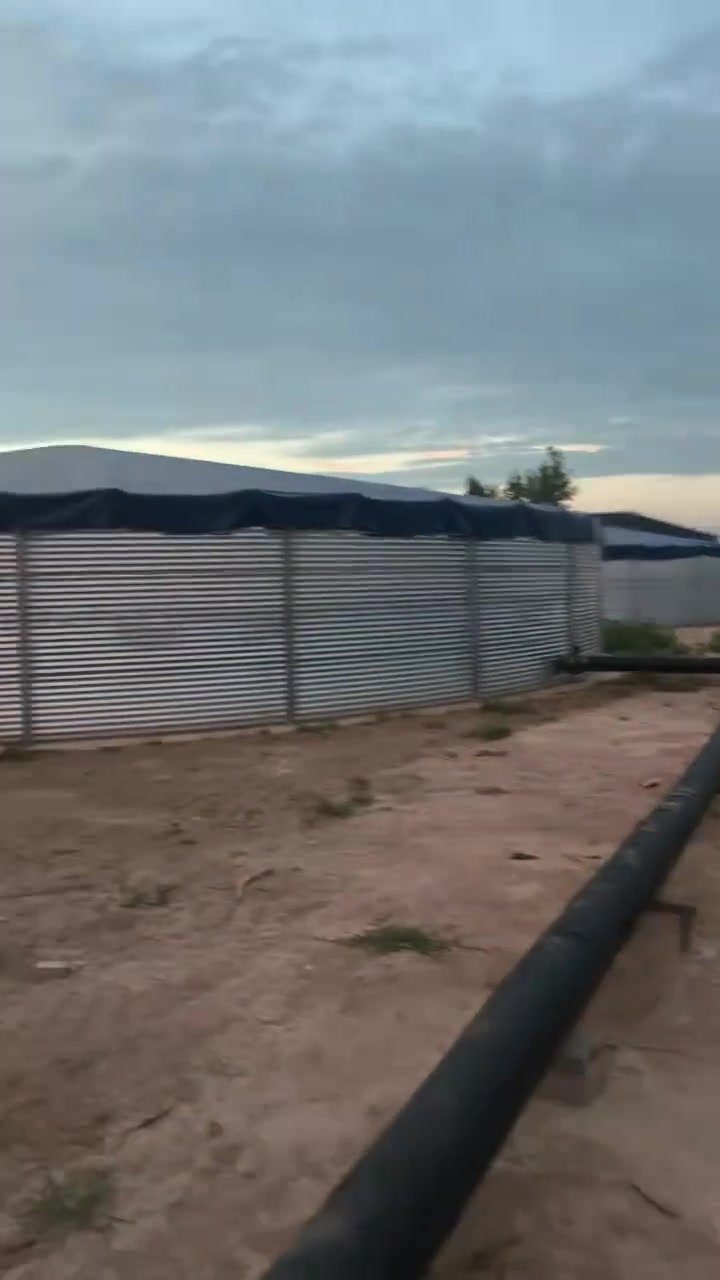
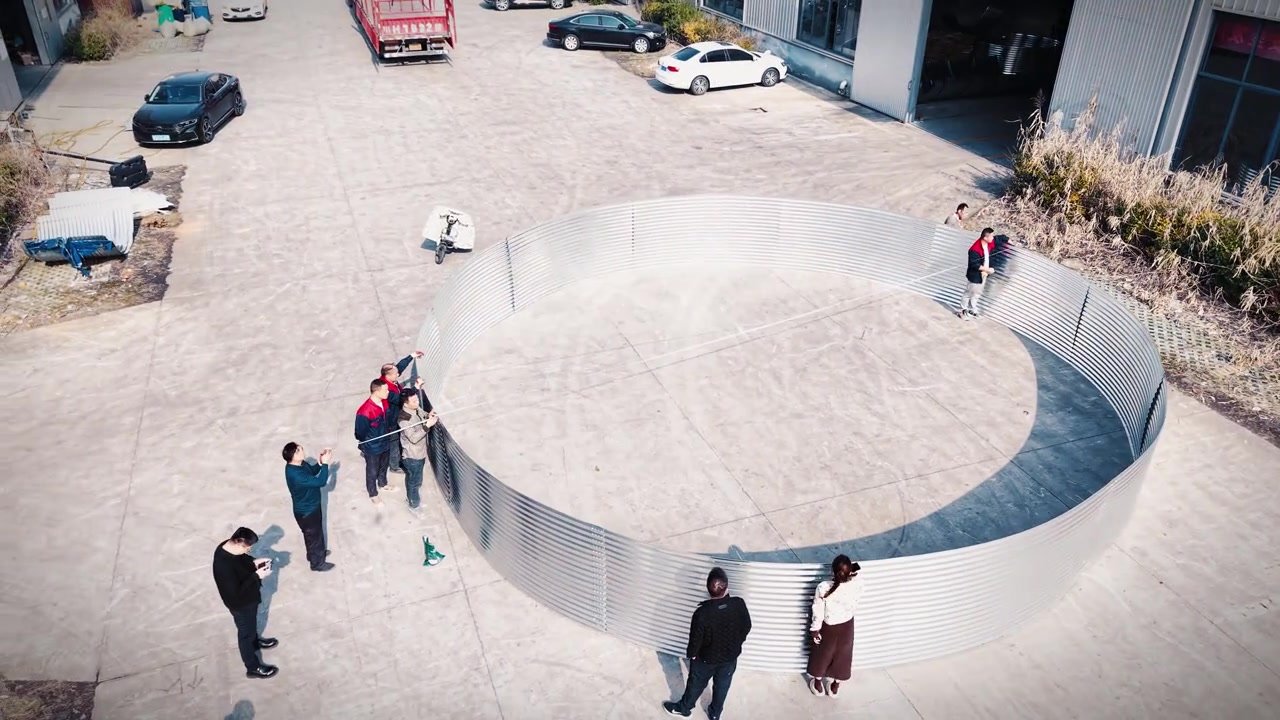
Assembly itself is mechanical: corrugated panels bolt together into a ring, the liner is unfolded and fitted, and the top rail locks the wall geometry. Most farm crews complete a mid-sized tank in a day or two with the written instructions and a video call for the first unit. Full dimensional and component details for our galvanized frame canvas fish pond for aquaculture are available on request, and we recommend every first-time buyer assemble one tank under guidance before scaling up.
Because canvas tanks are easy to list online but vary widely in build quality, we suggest buyers close every quotation with these five questions:
A supplier who answers these precisely, in writing, is a supplier who has actually built the tanks they sell. Our full galvanized sheet canvas fish pond range lists model-by-model specifications, and we are used to quoting against exactly this checklist.
The tank handles the water; the density question is answered by your aeration and water exchange plan. Canvas tanks are used in intensive grow-out projects across tilapia, perch, and bass farming precisely because the enclosed liner environment supports tight water control. What we advise against is buying a tank and assuming a density number comes with it — density is a function of the whole system.
Most pilot projects we advise start with several 6 m × 1.2 m tanks rather than one large tank. This spreads risk across batches, makes grading cycles manageable, and lets the team learn the system before scaling to 10 m and larger diameters.
The PVC liners we supply for aquaculture are produced for fish-rearing contact and are the same grades used across our fish farming tank projects. That said, we distinguish clearly between aquaculture use and drinking water: these tanks are not certified as potable water tanks, and we do not market them as such.
Yes — the frame and liner carry no UV-driven site restriction, and indoor installations reduce UV aging of the exposed liner edge. If you are planning a fully enclosed recirculating facility, talk to us first: our tanks integrate well as rearing vessels, but a complete recirculating system design is a separate engineering task we do not claim to provide.
If you are planning a bass farming project and want tank sizes, liner grades, and a packing plan matched to your site — not a generic catalog price — send us your project outline. Tell us your target stocking plan, site conditions, and timeline, and we will respond with a specification sheet, freight estimate, and honest advice on configuration, including when a canvas tank is not the right tool for the job.
Haoqiu’an (Suqian) Supply Chain Co., Ltd.
Contact: Mr. Zhang
WhatsApp: +86 19816086083
Email: f518@agriqua.com
Explore Galvanized Sheet Canvas Fish Pond, Large Water Storage Tank, Galvanized Sheet Water Pool, Orchard Water Storage Tank for irrigation, aquaculture, orchard storage, modular installation, and wastewater handling projects.
Use this article as a starting point, then send us your project details for a more direct recommendation.