

PVC Fish Pond Liner 400g to 1000g: How to Choose GSM
When buyers compare galvanized frame fish ponds, most questions are about steel thickness and frame size. In r...
Article date: 2026-11-05 | Updated date: 2026-11-05
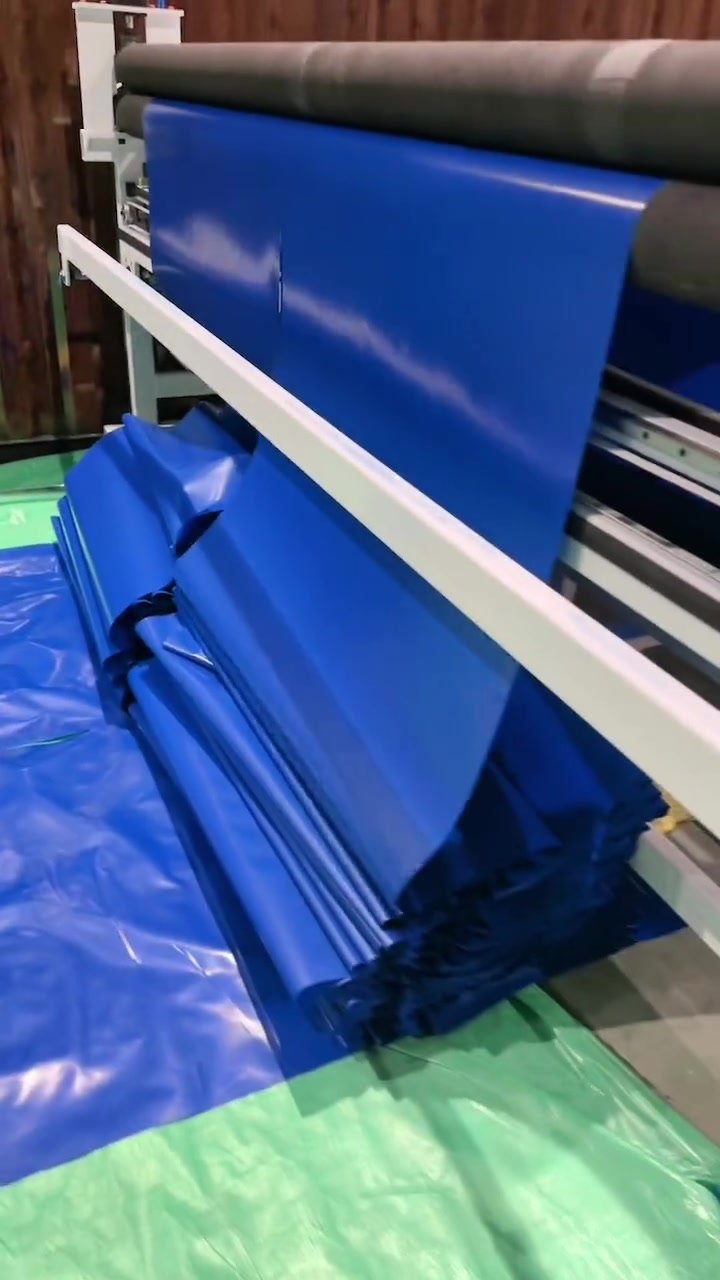
“How long does the liner last?” It is one of the first questions every serious buyer asks when sourcing a galvanized frame fish pond, and it is a fair one. The steel frame is easy to judge — you can see the pipe thickness and the galvanizing. The PVC liner is different: it is folded inside the tank, hidden under water, and its condition only becomes obvious after seasons of real use. This article does not pretend there is one magic number. Instead, it explains what actually decides the service life of a PVC liner fish pond, which factors shorten liner life fastest, and how to inspect a liner so you can replace it on your schedule — not in the middle of a grow-out cycle.
Any supplier who quotes an exact lifespan without asking about your project is guessing. Two farms can buy identical 600g liners and see very different outcomes, because liner aging is driven by conditions, not by the calendar. A liner spending its life in a shaded, well-prepared site with gentle water chemistry ages far slower than the same liner sitting on rough ground under intense sun at 40°C.
That is why responsible manufacturers talk about use conditions and material grades instead of fixed years. What we can say with confidence is this: liner life is predictable in direction. Every factor below either adds seasons of service or quietly subtracts them, and buyers who control those factors consistently get the longer end of the range.
Sunlight is the main natural enemy of any exposed PVC material. UV slowly breaks down the plasticizers and coating on the parts of the liner above the waterline and around the top edge of the tank. Projects in high-UV regions — much of Africa, the Middle East, and high-altitude sites — should specify UV-resistant grades and consider a slightly heavier liner, because the difference shows up after the second or third outdoor season, not in the first months. Shading the tank or keeping the water level consistently high also reduces the amount of liner cycling between wet and dry sun exposure.
More early-life liner failures come from the ground than from the material. A stone, a root, or a stubble stalk pressing against the liner under full water load works like a slow puncture. A properly prepared base — leveled, compacted, and cushioned with fine sand or geotextile — removes most of this risk before the first fill. When our galvanized frame canvas fish pond kits ship out, the installation guide dedicates more space to ground preparation than to frame assembly, and that ratio reflects where real problems happen.
GSM (grams per square meter) is a proxy for mechanical durability: a 400g liner handles protected, low-stress duty, while 750g–1000g grades are built for large diameters, high-density stocking, and repeated relocation. But GSM alone is not the whole story — the quality of the base fabric and the coating process determine how well that weight performs. When comparing quotations, ask what the base fabric is and how seams are joined, not only the weight figure. We covered the full weight-selection logic in our earlier guide on choosing 400g–1000g liner weights.
Liners tolerate a wide range of aquaculture water conditions, but two habits shorten life across all climates: aggressive cleaning and neglected water balance. High-pressure jets aimed directly at seams, stiff wire brushes, and harsh solvents all attack the coating surface that protects the fabric underneath. Soft brushes, mild detergent, and a smooth floor slope that lets debris drain out will keep the same liner looking and performing younger for years. This matters especially for intensive projects — a well-managed commercial PVC liner fish farming tank is cleaned more often, so the cleaning method becomes a real lifespan variable.
Every drain-down, fold, and re-install is a stress event. Creasing a liner tightly while it is still wet, dragging nets or equipment across the floor, or stacking heavy panels on a folded liner during transport all create weak points that may only fail several cycles later. One of the advantages of a modular canvas pond is that it can move with your project — but relocatable does not mean handling-proof. Slow drying, loose folding, and protected storage between uses are what make the next installation as trouble-free as the first.
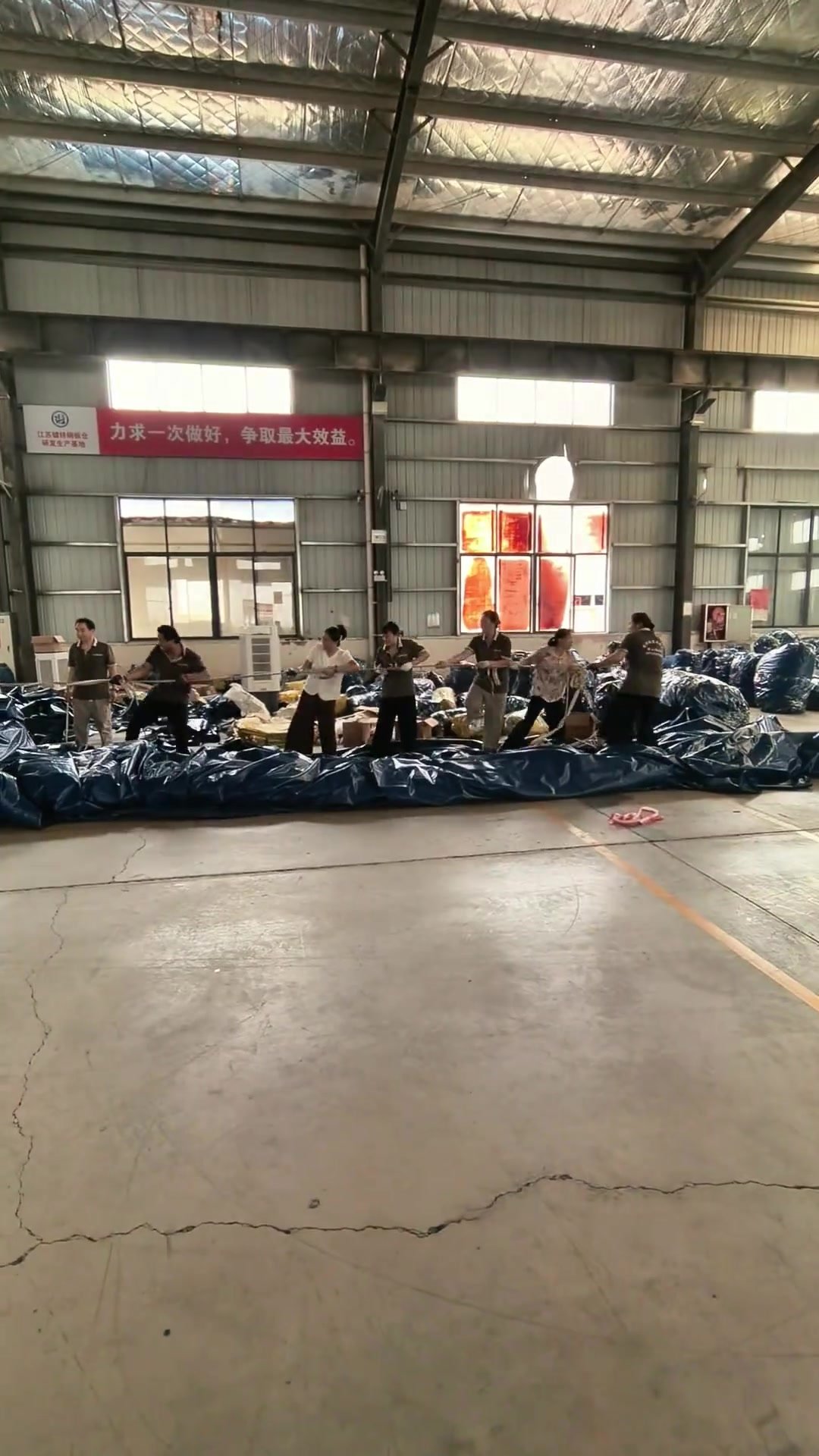
Instead of promising a number of years, it is more useful to know where each project type tends to wear first. The table below summarizes the patterns that experienced buyers plan around:
| Project Type | What Usually Wears First | Practical Planning Note |
|---|---|---|
| Nursery / short-cycle tanks | Very little mechanical wear; UV at the top edge is the main aging path | Standard liner weights serve well; inspect the rim area each season |
| Tilapia / bass grow-out ponds | Floor abrasion from harvesting activity and equipment | Mid-to-heavy liner weights; use smooth harvesting nets and floor drains |
| Crayfish / turtle ponds | Scratching and puncture risk from claws and hard-shelled animals | Heavier grades are the usual choice; check the floor before each new cycle |
| Large-diameter storage / irrigation tanks | Stress at seams and fittings from sustained water pressure | Heavy liners with reinforced seams; check seams and outlets annually |
| Relocated tanks (moved between sites) | Fold lines and creases from repeated packing | Dry fully, fold loosely, and inspect fold areas at every re-install |
Buyers who match liner weight to project type — rather than buying one grade for everything — report the fewest surprises. The correct match is a conversation, not a guess: any established supplier should be able to recommend a grade once you describe diameter, depth, species, and how often the tank will be moved. You can also compare matched frame-and-liner configurations across our galvanized sheet canvas fish pond series.
Liner life is extended cheapest by catching small issues early. We recommend this routine at every drain-down or at least once per production cycle:
Small punctures and seam lifts are normally repairable in the field with PVC patch kits — the important thing is doing it at drain-down, not after seepage has undermined the base under a full tank. The smarter purchasing question is therefore not only “how long will the liner last?” but “how easy are the liners to inspect, patch, and replace?” A modular design where the liner is a separate, replaceable component means a worn liner is a planned maintenance item ordered in advance — not an emergency that empties your pond mid-cycle. That replaceability is one of the practical advantages canvas ponds hold over concrete structures, where a leaking floor is a construction problem.
Heavier grades resist puncture, abrasion, and folding stress better, so for demanding projects they generally do extend service life. But the gain only materializes when installation, cleaning, and handling are also correct. A 1000g liner on an unprepared gravel base will still fail early; a 600g liner correctly installed on a clean sand cushion can comfortably outlast it in a low-stress application.
Yes. Small punctures and cuts are the classic case for PVC patch repair, and many farms handle patches themselves between cycles. Seam separation or widespread UV cracking is different — that pattern suggests the liner is approaching the end of its economic life, and replacement planning makes more sense than repeated patching.
At minimum, inspect fully at every drain-down, and do a quick visual check of the waterline and top edge each month during the production cycle. New installations deserve an extra check after the first fill and again after the first full cycle, when any installation-related stress points will have shown themselves.
Skipping ground preparation. Nothing else damages a liner as quickly or as predictably as sharp objects pressing against it under full water load. The sand or geotextile cushion takes an hour to install and removes the most common cause of early failure.
Liner service life is not a lottery; it is the sum of the right material grade, correct installation, and ordinary care. Tell us your tank diameter, water depth, species, and site conditions, and we will recommend the liner weight and frame configuration that fits — including replacement liners for tanks you already run.
Contact Haoqiu’an (Suqian) Supply Chain Co., Ltd. — Attn: Mr. Zhang | WhatsApp: +86 19816086083 | Email: f518@agriqua.com
Explore Galvanized Sheet Canvas Fish Pond, Large Water Storage Tank, Galvanized Sheet Water Pool, Orchard Water Storage Tank for irrigation, aquaculture, orchard storage, modular installation, and wastewater handling projects.
Use this article as a starting point, then send us your project details for a more direct recommendation.